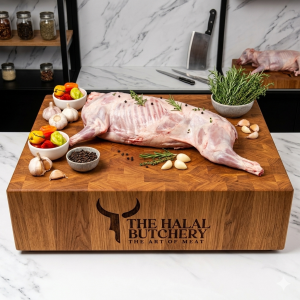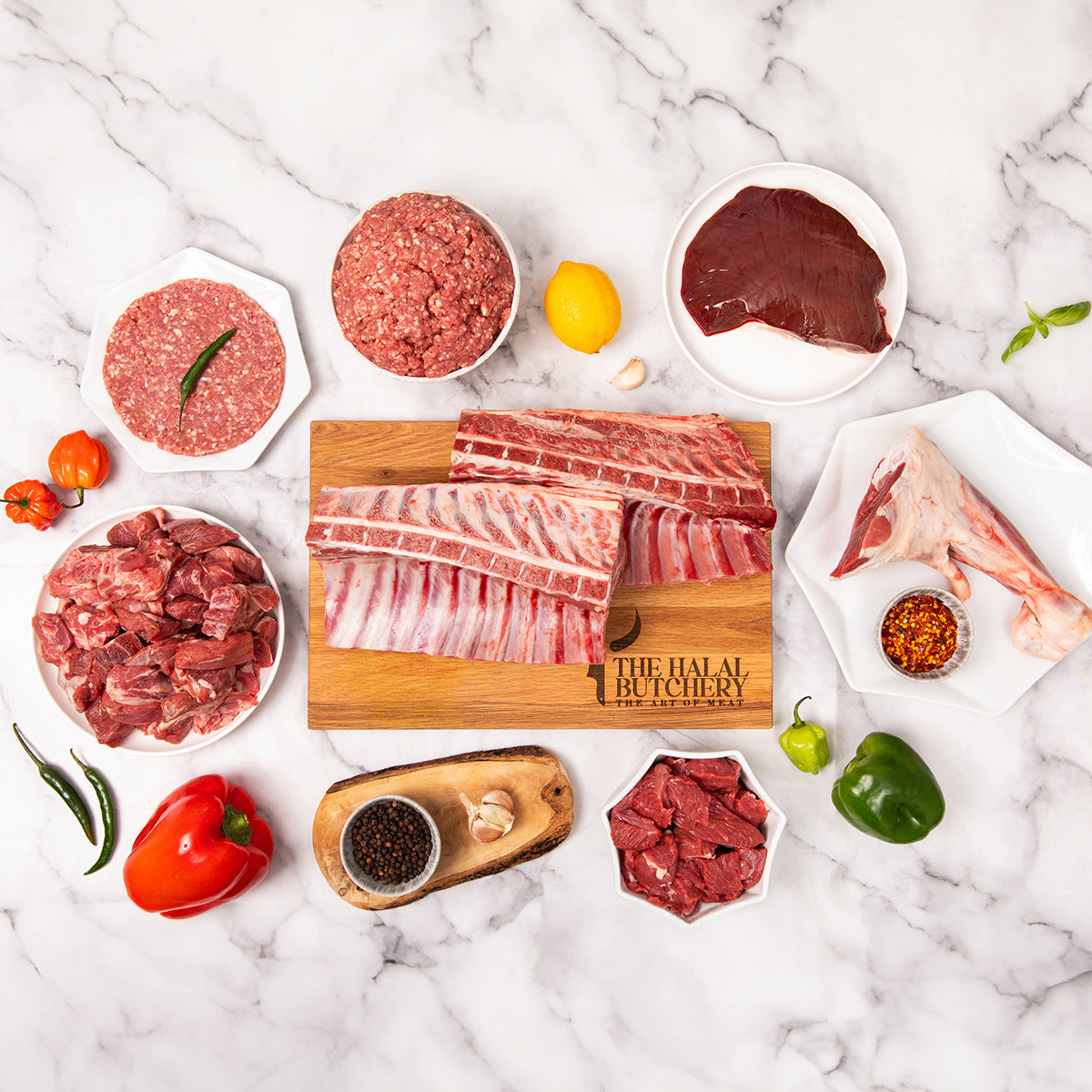
Lamb shoulder is best cooked low and slow: start it hot for 20 minutes at 220°C, then cover and roast at 160°C for 3 to 4.5 hours, depending on size, until the meat is tender enough to fall off the bone. It is the cut butchers cook at home. The leg gets the glory, the chops get the grill, but ask anyone who has spent a career behind the block what they would take home for a Sunday and most will say shoulder.
It is cheaper than leg, carries more fat and connective tissue, and because of that it forgives almost anything. Give it time and low heat and it turns into the softest, most flavourful lamb you will eat. Rush it and it fights back. For home cooks who want a reliable lamb dish for a family meal or a special occasion, this guide covers what lamb shoulder is, how to choose a good one, how long to cook it, and the best ways to serve it, including slow roast, pulled lamb, and karahi.
What lamb shoulder actually is
The shoulder is the front quarter of the animal, the working muscle above the front leg. Because the lamb uses it constantly, the meat is threaded with connective tissue and marbled with fat. That sounds like a drawback. In fact it is the whole point.
Connective tissue is mostly collagen. Cooked hot and fast, collagen stays tough and chewy. Cooked slowly at a low temperature, it melts into gelatine, which is what gives slow-cooked lamb that rich, sticky, coating quality and keeps the meat moist for hours. The fat renders down and bastes the meat as it goes.
A whole bone-in lamb shoulder in the UK weighs roughly 1.8 to 2.5kg and will feed six to eight. THB’s lamb shoulder is butchered fresh to order and delivered the next day, never frozen, so you are starting with the best possible version of the cut.
Bone in or boneless?
Bone in, every time, if you have the oven space and the time.
The bone conducts heat evenly through the joint, adds flavour to the meat and the juices, and stops the meat shrinking and tightening. A bone-in shoulder also holds its shape better over a long cook, so it looks the part when it comes to the table.
Boneless shoulder is easier to carve and cooks a little faster. It is the better choice if you want to stuff and roll it, or dice it for a curry. If you are diced-curry bound, THB’s lamb diced saves you the knife work and comes from the same forequarter cuts.
What to look for when buying
Fresh lamb shoulder should be a clear pink to rosy red with firm, creamy white fat. The fat cap on top should be even, not patchy, and there should be a good layer of it, at least half a centimetre. That fat is going to render for four hours and keep everything underneath moist.
Avoid shoulder that looks grey or brown at the edges, or where the fat is yellow and soft. Those are signs of age or poor storage. THB Mag has a useful piece on why meat goes grey and how to preserve its flavour if you want the detail.
One more thing. Buy fresh, not frozen. Freezing damages muscle fibres and drives out moisture when the meat thaws. For a cut whose whole appeal is tenderness and juiciness, that matters. If you need to store it, freeze it yourself on the day it arrives.
Method one: classic slow roast lamb shoulder
This is the version that fills the house with the smell of a proper Sunday. Total time is around four to five hours, almost all of it hands-off.
Preparation
Take the shoulder out of the fridge an hour before cooking so it is not fridge-cold going into the oven. Pat it dry with kitchen roll. Score the fat cap in a diamond pattern with a sharp knife, cutting through the fat but not into the meat.
On a chopping board, make a paste of four crushed garlic cloves from a garlic bulb, a tablespoon of chopped rosemary, a tablespoon of sea salt, a teaspoon of black pepper and two tablespoons of olive oil, then rub it into the scored fat and all over the meat. If you have time, do this the night before and leave it uncovered in the fridge overnight; the salt seasons the meat deeply and dries the surface for better browning.
Cooking
Preheat the oven to 220°C (200°C fan). Sit the shoulder on a bed of two roughly chopped onions, a head of garlic split in half, and a few rosemary sprigs in a deep roasting pan or roasting tray, using a roomy dish so the meat sits snugly. Pour in 300ml of water or stock.
Roast at the high temperature for 20 minutes to start the fat rendering and the surface browning. Then drop the oven to 160°C (140°C fan), cover the tin tightly with tin foil; a double layer helps seal in moisture, and leave it alone.
Timings at 160°C, covered:
| Shoulder weight | Cooking time (after the initial 20 minutes) |
|---|---|
| 1.5kg | 3 hours |
| 2kg | 3 hours 45 minutes |
| 2.5kg | 4 hours 30 minutes |
As a guide, a 2.4kg lamb shoulder usually takes about 4 hours after the initial blast. Check the liquid every 90 minutes and top up with a splash of water if the tin is dry; shoulder can cook a bit longer without drying out, unlike leaner cuts. For the last 30 minutes, remove the foil to crisp the fat.
How to tell it is done
Forget pink. Slow-roast shoulder is done when it is falling off the bone. Push a fork into the thickest part and twist. If the meat pulls apart with no resistance, it is ready. If you use a thermometer, you are looking for 90°C or above in the thickest part. This is not a mistake: shoulder needs to go well past the temperatures you would use for leg.
Resting and serving
Lift the shoulder onto a board, tent it loosely with foil, and rest for at least 20 minutes. Meanwhile, strain the meat juices and cooking liquid from the tin, skim the fat, and reduce them in a pan over medium high heat for five minutes to make a gravy that needs nothing else; let it simmer until it reaches the desired consistency.
Serve this delicious lamb with roast potatoes cooked in a little of the lamb fat, and something sharp alongside: mint sauce, a yoghurt and herb dressing, or a spoon of pomegranate molasses. Broccoli or mushy peas also work well here. For a lighter summer option, try a freekeh and fava bean salad. For a full roast dinner with all the trimmings, THB’s Roasting Box puts the shoulder alongside the other cuts you need.
Method two: pulled lamb shoulder
Pulled lamb is slow-roast lamb taken one step further, shredded and dressed, and it is one of the best things you can put in front of a crowd.
Follow the slow roast method above, but push the cooking time on by 30 to 45 minutes so the meat is completely collapsed. When it is rested, pull the meat off the bone with two forks, discarding any large pieces of fat. Toss the shredded lamb through the reduced pan juices.
From there, take it wherever you like.
Middle Eastern: dress the pulled lamb with lemon juice, chopped parsley and a pinch of sumac. Pile into warm flatbreads with pickled cabbage, tahini and chilli sauce.
Spiced: before roasting, swap the rosemary paste for a rub of ground cumin, coriander, smoked paprika, cinnamon and a little chilli. After pulling, finish with fresh mint and a squeeze of lime. Serve with rice or in wraps with a cooling raita.
British: keep the rosemary and garlic, pull the lamb, and serve on a bun with mint sauce and crisp lettuce. Lamb’s answer to pulled pork, and better.
Pulled lamb also freezes well in its juices, so a 2.5kg shoulder can become three or four meals across a month.
Method three: lamb shoulder karahi
Shoulder is the cut that makes karahi worth eating. The fat and collagen carry the spices and give the gravy body, and the meat softens without falling into threads.
You will need about 1kg of bone-in shoulder cut into karahi pieces. Ask for it diced on the bone, or order THB’s lamb diced, which is cut on the bone for exactly this purpose. If you prefer the deeper flavour of an older animal, mutton diced on the bone works the same way with about 30 minutes more cooking; the mutton vs lamb guide covers the difference.
Heat 4 tablespoons of oil or ghee in a heavy karahi or wide pan. Add the lamb and fry hard over a high heat until it is browned all over and any liquid has cooked off, about 10 minutes. Add 2 tablespoons of ginger and garlic paste and fry for a minute more.
Add 4 large tomatoes, roughly chopped, a teaspoon each of salt and chilli powder, and half a teaspoon of turmeric. Cover and cook on a medium-low heat for 40 to 50 minutes, stirring now and then, until the lamb is tender and the tomatoes have broken down into a thick gravy with oil pooling at the edges.
Uncover, turn the heat up, and add a tablespoon of crushed coriander seeds, a teaspoon of cracked black pepper and 3 or 4 slit green chillies. Fry hard for 5 minutes until the gravy clings to the meat. Finish with a handful of chopped coriander, a few slices of ginger and a squeeze of lemon. Serve with naan or hot roti.
Getting the most from one shoulder
A whole shoulder is a generous amount of meat, and there is no rule that says you must roast the lot; it is also a minimal effort way to stretch one joint across several meals, and a 1.5kg shoulder yields roughly 700g of cooked meat.
Ask your butcher to split it: roast the blade end, dice the rest for karahi or a stew. THB will cut to order if you note it at checkout. Save the bones from any preparation for stock, and keep the rendered fat from a roast in a jar in the fridge; it is superb for roasting potatoes.
Leftover roast shoulder keeps for three days in the fridge and reheats gently in its juices. Cold, it makes an excellent sandwich with chutney.
Frequently asked questions
How long does lamb shoulder take to cook?
For a slow roast at 160°C (140°C fan), allow roughly 1 hour 45 minutes per kilo after an initial 20 minutes at 220°C, so a 2kg shoulder takes about four hours in total; times can vary depending on oven accuracy and the exact shape of the joint, and a 2.4kg shoulder is usually around the 4-hour mark in total. It is done when the meat pulls easily from the bone, not at a set time.
Can you cook lamb shoulder pink?
You can, but you should not. Shoulder is full of connective tissue that stays chewy at medium-rare temperatures. It needs to reach 90°C or more for that collagen to soften. If you want pink lamb, buy lamb leg or loin instead.
Should I cover lamb shoulder when roasting?
Yes, for most of the cook. Covering it tightly with foil traps steam and keeps the meat moist while the collagen breaks down. Uncover for the final 30 minutes to crisp the fat.
Is lamb shoulder better than leg?
For slow cooking, yes. Shoulder has more fat and flavour, costs less, and is far more forgiving, which makes it the better choice for special occasions when you want an easy roast. Leg is the better cut for a pink, quick roast. THB’s guide to cooking the perfect leg of lamb covers that side.
Can I cook lamb shoulder in a slow cooker?
Yes. Brown it in a pan first, then cook on low for 8 hours or high for 5 with a little liquid and your aromatics. You lose the crisp fat cap, so finish it under a hot grill for a few minutes if you want that.
How much lamb shoulder per person?
Allow 350 to 400g of bone-in shoulder per adult. A 2.5kg shoulder comfortably feeds six to eight with sides.
Is THB lamb shoulder halal?
Yes. All THB meat is certified halal, hand-slaughtered in accordance with Islamic principles, and butchered fresh for next-day delivery.
Order your lamb shoulder
Whether it is a Sunday roast, an Eid table or a pot of karahi for the week, lamb shoulder rewards the cook who gives it time. Order a fresh, never frozen lamb shoulder from THB today for this roast lamb shoulder recipe, a delicious lamb roast for Sundays or special occasions, or explore the full lamb range, and it will be at your door tomorrow, vacuum-sealed and chilled, ready for the oven.