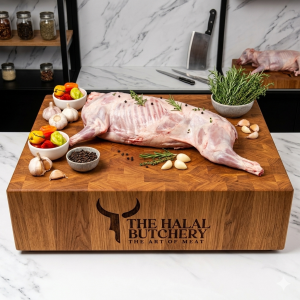
Goat is the most eaten red meat on earth and one of the least eaten in Britain. Walk through most of the world, from Jamaica to Karachi to Lagos to the Greek islands, and goat is on the table as a matter of course. Here it has been a speciality ingredient for decades, found in Caribbean takeaways and South Asian restaurants and almost nowhere else.
That is changing, slowly. More British cooks are discovering that goat is lean, full of flavour and superb in the slow-cooked dishes we already love. If you are one of them, or if you grew up on goat and want to know how to buy it well online, this is the guide.
What goat meat and kid meat actually are
Goat meat comes from the domestic goat. In British usage there is a rough age distinction: kid or “chevon” for the meat of a young goat, and simply “goat” for older animals. In practice, UK butchers mostly sell goat from animals between six months and two years old, which gives a good balance of flavour and tenderness.
Much of the goat sold in Britain comes from the dairy industry. Male kids born to dairy goats have historically been a by-product with little value; raising them for meat is a more sensible and less wasteful outcome, and it is one of the reasons goat has a good sustainability story compared with some other red meats.
THB sells fresh, halal goat meat, mixed diced on the bone, butchered to order and delivered the next day.
What does goat taste like?
People who have never eaten it usually expect goat to taste strong or gamey, like a more intense mutton, and it is often believed to be stronger than it really is. It does not. If anything goat is milder than mutton, with a sweetness closer to lamb, but leaner and a little earthier. The texture is firmer than lamb, because goat carries very little intramuscular fat, and the meat has a slightly darker colour.
The nearest comparison most British cooks will recognise is somewhere between lamb and venison: red, lean, clean-tasting, with a rich taste and excellent with bold spice. Properly slow cooked, goat becomes tender without falling into mush, and it holds its shape in a curry or stew better than lamb does.
The bad reputation comes from goat that has been cooked wrongly. Grill a goat chop like a lamb chop and it will be tough and dry, because there is no fat to protect it. Give the same meat two hours in a spiced sauce and you understand why half the world cooks it every week: it is delicious.
Goat vs lamb vs mutton
The three are often confused, especially since “mutton” in Indian English can mean goat as well as sheep. Here is how they compare.
| Goat | Lamb | Mutton | |
| Animal | Goat, usually 6 to 24 months | Sheep under 12 months | Sheep over 2 years |
| Fat | Very lean, little marbling | Moderate, soft white fat | Higher, firmer fat |
| Flavour | Mild, slightly sweet, earthy | Mild, sweet, grassy | Deep, rich, savoury |
| Texture | Firm, holds shape | Tender, soft | Firm, softens with time |
| Best cooked | Slow, wet, spiced | Fast and hot, or slow | Slow, wet, spiced |
| Typical dishes | Goat curry, birria, karahi, tagine | Roast leg, chops, kebabs | Nihari, haleem, rogan josh |
If you want the leanest option with real flavour, goat wins. If you want tenderness for a quick cook, lamb. If you want the deepest flavour for a long braise, mutton. The mutton vs lamb guide goes deeper on the sheep side of the table.
Is goat meat healthy?
Goat is one of the leanest red meats available. Per 100g of cooked meat, it has less fat and fewer calories than beef, lamb or pork, and roughly the same protein. Because so little of the fat is marbled through the muscle, most of what there is can be trimmed before cooking or skimmed from the pot afterwards.
It is also a good source of iron, zinc, potassium and vitamin B12, in line with other red meats. For anyone tracking protein for training, goat gives a lot of lean protein per portion, which is why it sits comfortably alongside the chicken and lean beef in a well-planned diet. THB’s gym and health boxes are built on that principle.
The usual sense applies. Goat is a red meat, portion size matters, and how you cook it matters more than the meat itself. A goat curry finished with a cup of oil is not a health food. The same goat, slow cooked with tomatoes, onions and spice and the fat skimmed off, is a very good one.
The best cuts of goat and what to do with them
Because goats are smaller and leaner than sheep, the cuts are smaller too and almost all of them want slow cooking. In the UK, goat is most often sold diced on the bone, which is exactly right for the dishes most people make. Some suppliers also offer a whole or half goat carcass. Some do not sell goat with the skin on because of regulations.
Diced on the bone (mixed). The classic preparation. A mix of shoulder, leg, neck and rib pieces cut to curry size, bone in. Prepared packs typically do not include the head or feet. The bone adds gelatine and depth to the sauce and the mix of cuts gives variety in every spoonful. THB’s goat meat, mixed diced is this cut. For Jamaican curry goat, Pakistani karahi gosht, Nigerian pepper soup or a Moroccan tagine, this is what you want.
Shoulder. Slow roast whole, or braise. Shoulder has the most connective tissue and takes the longest to soften, so it gives the richest result when it does.
Leg. The leanest primal. Good for slow roasting whole with plenty of liquid and a tight cover, or diced for a slightly leaner curry.
Chops and ribs. Marinate overnight in yoghurt and spice, then cook slowly under a lid or in a low oven before a final blast of heat. Never grill them from raw like lamb chops.
Shank and neck. Braising cuts. Excellent in nihari-style dishes or any slow stew with whole spices.
How to cook goat meat: the principles of slow cooking
Whatever the recipe, the same rules apply.
Brown it hard. Goat’s lean surface takes colour well. Fry it in batches in hot oil until deeply browned before adding liquid. This is where much of the flavour comes from.
Cook it wet and slow. Goat needs liquid and time. Aim for a gentle simmer or a low oven, 150°C to 160°C, for 1.5 to 2.5 hours depending on the age of the animal and the size of the pieces. It is done when a piece pulls easily from the bone. A pressure cooker cuts this to 35 to 45 minutes.
Marinate if you have time. Yoghurt, lime or vinegar, ginger, garlic and salt for a few hours or overnight both season the meat and start to tenderise it.
Do not rush the fat. There is not much, so do not trim it all off before cooking. Let it render into the sauce and skim later if you want to.
Season boldly. Goat carries spice beautifully. Scotch bonnet, allspice and thyme; garam masala, ginger and green chilli; cumin, coriander and preserved lemon. Timid seasoning wastes the meat.
Three dishes worth learning
Jamaican curry goat
Marinate 1kg of diced goat overnight with 3 tablespoons of Jamaican curry powder, a chopped onion, 4 crushed garlic cloves, a thumb of grated ginger, 3 spring onions, a few sprigs of thyme, a teaspoon of allspice berries, a whole scotch bonnet and a good teaspoon of salt. Next day, scrape the marinade aside and brown the meat hard in oil. Return the marinade to the pan, add a tin of coconut milk or 400ml water, cover and simmer for 2 hours. Add two diced potatoes for the last 30 minutes. Serve with rice and peas, a curry-style preparation especially popular for Easter when cooking kid meat.
Karahi gosht
Fry 1kg of diced goat on the bone in 4 tablespoons of oil over a high heat until browned and dry, about 10 minutes. Add 2 tablespoons of ginger-garlic paste, then 5 chopped tomatoes, a teaspoon of salt and a teaspoon of chilli powder. Cover and cook on a low heat for 60 to 75 minutes until tender, checking the liquid. Uncover, add a tablespoon of crushed coriander seed, a teaspoon of black pepper and 4 slit green chillies, and fry on high until the sauce clings. Finish with fresh coriander and sliced ginger. Naan on the side. For the lamb version, see the lamb shoulder karahi method.
Slow-roast spiced goat shoulder
Rub a whole shoulder with a paste of cumin, coriander, smoked paprika, cinnamon, garlic, salt and oil. Sit it on sliced onions in a deep tin with 400ml of stock, cover tightly with foil, and roast at 150°C (130°C fan) for 4 hours. Uncover for the last 30 minutes. Pull the meat from the bone and serve in flatbreads with pickles, yoghurt and herbs; the stock and slow roast keep it succulent. The lamb shoulder guide covers the technique in more detail; goat wants slightly more liquid and a tighter cover.
Buying goat meat online
Fresh goat is genuinely hard to find in most British towns. Supermarkets rarely stock it, and many high street halal butchers carry it only on request. Being able to order online from a halal butcher who cuts it fresh solves that.
Look for goat that is sold as goat, not as “mutton”, so you know what you are getting. Look for fresh rather than frozen: goat is lean, and freezing then thawing dries it out more than a fatty meat, while careful handling helps maintain quality. And look for halal certification if it matters to you, as it does to most of the people who eat goat in Britain.
THB’s goat meat is fresh, never frozen, certified halal and hand-slaughtered. It is vacuum-sealed for delivery in a chilled box and delivered to your door within 24 hours. If you want to stock the freezer, freeze it on the day it arrives.
Other UK suppliers, such as Chestnut Meats, also offer kid goat meat delivered to your door.
Frequently asked questions
What does goat meat taste like?
Mild, slightly sweet and a little earthy, somewhere between lamb and venison. The difference between what many people expect and the actual flavour is that it is leaner and firmer than lamb and less rich than mutton. It is not gamey when fresh and cooked properly.
Is goat meat healthier than lamb or beef?
It is leaner, with less fat and fewer calories per 100g than lamb or beef, and comparable protein, iron and B12. Whether a dish is healthy still depends on how it is cooked.
Is goat meat halal?
Goat is a permitted animal, so goat meat is halal when it comes from halal slaughter. THB’s goat is certified halal and hand-slaughtered.
How long does goat take to cook?
Slow cooked at a simmer or in a low oven, 1.5 to 2.5 hours for diced meat on the bone, or 4 hours for a whole shoulder. In a pressure cooker, 35 to 45 minutes.
Why is goat meat tough?
Because it was cooked too fast or too dry. Goat has very little fat and plenty of connective tissue, so it must be cooked slowly in liquid. Cooked properly it is tender and holds together well.
Is mutton the same as goat?
Not in Britain, where mutton means older sheep. In Indian and Pakistani English, “mutton” often means goat, which causes confusion. At THB, goat and mutton are separate categories.
Where can I buy fresh goat meat in the UK?
THB delivers fresh, halal goat meat nationwide within 24 hours, and customers can order online for delivery across the UK. Order from the goat category.
First time buyers often start with fresh mixed diced goat.
Some shoppers prefer delivery to home or work.
Goat can also be purchased fresh from specialist halal butchers online.
Try it this week
Farm goat meat deserves a place in the British kitchen alongside lamb and beef. It is lean, sustainable, full of flavour, and a natural fit for the curries, stews and slow roasts we already cook, with animals raised in a herd and fed a natural diet that can include grass and hay, and meat produced with care. Order fresh goat meat from THB today, delivered tomorrow, while stock meets current demand, and cook it the way half the world does.