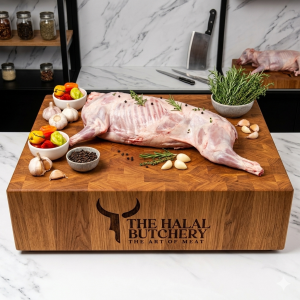
A beef brisket recipe works best when you cook the meat low and slow until it turns tender, and this guide shows you how to do that at home in the oven, smoker or slow cooker. Brisket has had a remarkable decade. Fifteen years ago it was a cheap braising cut your grandmother pot-roasted. Then Texas barbecue arrived in Britain, and a joint that once cost next to nothing became the most talked-about piece of beef in the country.
The good news is that brisket is still one of the best-value cuts on the block, feeding a crowd without demanding a smoker, a pit or a weekend off work. Whether you are a home cook planning a Sunday roast or a barbecue enthusiast chasing better results, you need the right piece of meat, a low temperature and patience. This guide covers all of it: what brisket is and why it needs slow cooking, how to choose the cut, a rub that works, timings for oven, smoker and slow cooker, slicing and serving tips, a spiced braised brisket dish for the nights when barbecue is not what you want, and answers to the common questions that trip people up.
What brisket is and why it needs time
Brisket comes from the lower chest of the animal, the pectoral muscles that support a large share of the animal’s weight. Because they work hard, they are dense with connective tissue and collagen, and they carry a thick cap of fat on one side.
That combination is why brisket cannot be rushed. Cooked fast, the collagen stays tight and the meat is tough enough to resole a boot. Cooked slowly at a low temperature over several hours, the collagen dissolves into gelatine, the fat renders through the meat, and you get beef that is soft, juicy and deeply savoury.
The technical target is an internal temperature of 90°C to 95°C. That is far higher than any steak, and it is not a typo. Brisket is done when it is tender, and tenderness comes late.
Choosing your brisket
Whole, point or flat
A full brisket has two muscles. The flat is the leaner, more even, rectangular piece. The point sits on top of it, fattier and more marbled, and separated from the flat by a seam of fat. In Texas the two are cooked together as a “packer” brisket. In Britain, most butchers sell brisket as a rolled or flat joint of 1.5 to 3kg. A flat brisket is especially useful in this recipe if you want neat slices or meat that can later be shredded for sandwiches.
For beginners, a boneless brisket joint of around 2kg is the easiest to handle and cook evenly in this brisket recipe. If you are following the original recipe with a marinade rather than a dry rub, you can marinate it for up to 48 hours. THB’s boneless beef brisket is this cut. For a bigger event, or if you want the extra flavour and moisture the bone brings, brisket on the bone is the one.
What to look for
You want a good fat cap, at least half a centimetre thick, that is white and firm. You want visible marbling through the flat if you can see it. And you want fresh, red meat, not brown or grey.
Fresh matters more for brisket than for almost any other cut, because the cook is so long. Meat that has been frozen and thawed loses moisture in the thaw and has less to give over five hours. THB’s brisket is butchered fresh, never frozen, and arrives vacuum-sealed and chilled the day after you order.
How much per person
Brisket loses 30 to 40 per cent of its weight in cooking as fat renders and moisture evaporates. Allow 350g of raw brisket per adult for a generous serving. A 2kg joint feeds five or six; a 3kg joint feeds eight to ten.
The rub
Texas purists use salt and coarse black pepper and nothing else. It works, and if you are cooking a good piece of beef there is a case for letting it speak. But brisket is a big, forgiving canvas and takes spice well. Here is a rub that suits both a smoker and an oven.
Combine 2 tablespoons of coarse sea salt and 2 tablespoons of coarsely ground, freshly ground black pepper for the core salt and pepper seasoning, then add 1 tablespoon of smoked paprika, 1 tablespoon of soft brown sugar, 1 teaspoon of garlic powder, 1 teaspoon of onion powder and half a teaspoon of cayenne. Mix well.
Pat the brisket dry. Trim the fat cap to about 1/4 inch if it is thicker than that, but do not remove it, and season generously as you rub the mixture into every surface. Ideally, wrap and refrigerate overnight; at minimum, leave it for an hour at room temperature before cooking. A 3-pound brisket takes about 4 hours to cook. Kosher salt also works well here if that is what you have on hand.
If you would rather not mix your own, THB’s rubs and glazes are made for exactly this.
Method one: oven brisket
This is the method for most British kitchens and it produces a brisket that is every bit as good as the fashionable version, without the smoke.
Preheat the oven to 140°C (120°C fan). Sit the rubbed brisket fat side up in a deep roasting pan or baking dish on a bed of two sliced onions and a few whole garlic cloves. If you want to brown it first, heat a little olive oil in a pan over medium high heat and sear the meat briefly for better flavour; some cooks prefer high heat for this step. Pour in 300ml of beef stock, then cover with a tight fitting lid if you have one, or seal the dish tightly with foil or aluminum foil, and put it in the oven.
Oven timings at 140°C, covered:
| Brisket weight | Approximate time |
|---|---|
| 1.5kg | 4 hours |
| 2kg | 5 hours |
| 2.5kg | 6 hours |
| 3kg | 7 hours |
These are approximate because brisket is done by tenderness, not time. For cooking beef brisket in the oven, this is the key cooking time and oven temperature guidance. From about the four-hour mark, check every 45 minutes. Push a skewer or fork into the thickest part. When it slides in with almost no resistance, as if into soft butter, the brisket is ready. A thermometer should read 90°C to 95°C.
For a darker, crustier bark, remove the foil for the last 45 minutes and brush the top with a tablespoon of the tin juices mixed with a teaspoon of brown sugar.
Lift the brisket onto a board, wrap it loosely in foil, and let the brisket rest and cool slightly for a full 30 minutes before slicing. This step is not optional. Brisket that is sliced straight from the oven loses its juices to the board.
Method two: smoker or kettle barbecue
If you have a smoker or a kettle barbecue with a lid, brisket is the cut it was made for.
Set up for indirect heat at 110°C to 120°C. Use a mild wood like oak or a fruit wood; hickory and mesquite are traditional in the American South but can overpower a British brisket. Place the brisket fat side up, away from the direct heat, and close the lid.
Allow roughly 1 hour 15 minutes to 1 hour 30 minutes per 500g, so a 2kg brisket will take five to six hours. Expect the internal temperature to climb steadily, then stall somewhere between 65°C and 75°C for an hour or more as moisture evaporates from the surface. This is normal. Wait it out, or wrap the brisket tightly in foil or butcher’s paper at that point, which pushes it through the stall faster and keeps it moist.
Take it off at 90°C to 95°C internal, when a probe slides in freely. Rest for at least 45 minutes wrapped. Longer is better: an hour in a cool box wrapped in towels is what the barbecue competition cooks do, and the meat only improves.
Method three: slow cooker beef brisket
Slow cooker beef brisket gives up the crust but delivers the tenderness in an especially hands-off way, making it ideal for busy home cooks on a weeknight or a packed weekend.
Rub the brisket as above. Brown it hard on all sides in a hot frying pan with a little olive oil over medium high heat; this is the one step that must not be skipped, because it is where the flavour comes from. Lay two sliced onions in the slow cooker, sit the brisket on top fat side up, and pour in 200ml of beef stock or beef broth, plus a tablespoon of Worcestershire sauce or a splash of cider vinegar, with a little soy sauce if you want extra savoury depth.
Cook on low for 8 to 10 hours or high for 5 to 6, until fork tender. Pressure-cooker cooking brisket takes about 1 hour 15 minutes if you want a faster alternative. Lift it out and rest for 20 minutes. If you want a crust, put the rested brisket under a hot grill for 5 to 8 minutes, watching it closely, while you reduce the cooking liquid in a pan to make a sauce.
Slicing and serving
Brisket is sliced against the grain, in pencil-thick slices, with a long sharp knife. Cutting with the grain gives you stringy meat no matter how well it was cooked. On a whole brisket the grain changes direction between the flat and the point, so slice each part separately.
Serve barbecue-style with pickles, white bread or brioche buns, coleslaw and a sharp barbecue sauce. Or go British and serve it as a Sunday roast, more like classic roast beef, with roast potatoes, Yorkshire puddings, greens and the reduced pan juices as gravy. Mashed potato, especially with horseradish, also works very well with brisket. For a more comfort-food style plate, try homemade Southern-style baked beans or creamy corn casserole. If you want to speed things up, you can also cook brisket in a pressure cooker for 1 hour 15 minutes. This is the sort of family favorite that works in several directions.
Leftovers are arguably the point. Cold sliced brisket in a sandwich with mustard. Chopped brisket in tacos with lime and coriander. Shredded brisket in soft rolls makes excellent slider-style leftovers. It keeps for four days in the fridge and freezes well in its juices.
Method four: brisket the other way, spiced and braised
Long before Texas, brisket was being slow cooked in spiced gravies across South Asia and the Middle East, and this brisket recipe is another slow cooked beef brisket approach built around braising rather than smoke. Its collagen gives body to the sauce and the meat stays together in generous pieces.
Cut 1.5kg of boneless brisket into large 5cm chunks, leaving the fat on. Brown them hard in olive oil in a heavy pot, in batches, and set aside. In the same pot, soften 3 sliced onions over medium heat until golden, which gives the base a great flavor, then add 2 tablespoons of ginger-garlic paste, a cinnamon stick, 4 cloves, 6 cardamom pods and a bay leaf. Stir in a tablespoon each of ground coriander and cumin, a teaspoon of turmeric, a teaspoon of chilli powder and 2 teaspoons of salt.
Return the beef, add 4 chopped tomatoes and 500ml of water, or swap part of the water for red wine for incredible flavour, bring to a simmer, cover and cook on the lowest heat for 2.5 to 3 hours, or in a 150°C oven, until the brisket is soft and the gravy has thickened. This kind of slow cooking keeps the meat tender and makes the recipe easy to get ahead on. Skim the excess fat. Finish with garam masala, fresh coriander and a squeeze of lemon. Serve with rice or naan, or try mashed potatoes with horseradish, crispy roast potatoes and Yorkshire puddings, homemade Southern style baked beans, or a side of creamy corn casserole. If you like the idea of a slow-cooked spiced beef dish, THB’s beef shank is the cut for nihari, which follows the same logic with a longer cook.
Frequently asked questions
How long does brisket take to cook in the oven?
At 140°C, covered, allow roughly 2.5 hours per kilo, so about five hours for a 2kg joint. Check for tenderness from four hours onwards. It is done when a fork slides in without resistance and the internal temperature is 90°C to 95°C. Cooking time can vary with size, and a meat thermometer helps confirm doneness once the centre reaches the usual brisket range.
Should brisket be cooked fat side up or down?
Fat side up in the oven and in most smokers, so the fat renders down through the meat and bastes it. Fat side down only if your heat source is directly below and fierce, where the fat protects the meat.
Why is my brisket tough?
Tough brisket is almost always the result of not cooking it long enough. Brisket goes through a tough phase between 60°C and 85°C internal before the collagen breaks down. If it is tough, put it back in and give it another hour.
Can I cook brisket at a higher temperature to save time?
You can push to 160°C and save an hour or so, but the result will be drier and less tender. Brisket rewards patience; if you are short of time, the slow cooker or a pressure cooker (about 75 minutes at high pressure for 1.5kg) is a better shortcut than a hot oven.
Is brisket good value?
Yes. It is one of the cheaper beef joints per kilo, feeds a crowd, and the leftovers stretch to several more meals. The only cost is time.
Is THB brisket halal?
Yes. THB’s boneless brisket and brisket on the bone are certified halal, hand-slaughtered, and delivered fresh, never frozen.
Can I freeze cooked brisket?
Yes. Slice or shred it, let the leftovers cool, pack them with some of their juices in an airtight container, and freeze for up to three months. Reheat gently, covered, in a low oven.
Order your brisket
Brisket is a classic joint for a Sunday roast or barbecue, and it asks for nothing but a low oven and a few hours. Raw brisket is different from corned beef, which is cured and usually sold or cooked in a different style. Order fresh halal boneless brisket or brisket on the bone from THB today, delivered chilled tomorrow, and put it in the oven before lunch. Explore the full beef range while you are there. For a barbecue-style finish, brush on bbq sauce near the end of cooking.